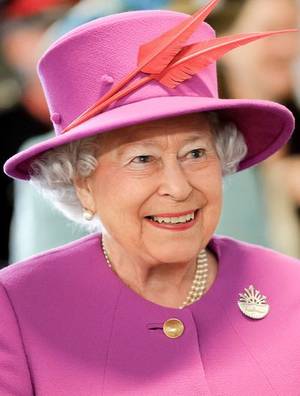

Queen Elizabeth II
Fire Tiger
Prince Philip
Intimate Compatibility Report
Your reading in brief
Queen Elizabeth II and Prince Philip: 61 out of 100, Moderate
Your Three Takeaways
- Your greatest strength together: Elements (85/100). Lean on it when life gets busy.
- Your growth edge: Day Pillar (23/100). This is where patience pays off most.
- Prince Philip activates the Peach Blossom marker in this pairing, so attraction flows strongly. Keep nurturing it from both sides.
Who's who
Queen Elizabeth II
- Core self
- Yang Metal, the Sword庚
- Year animal
- Fire Tiger丙寅
- Western Sun sign
- Taurus
Prince Philip
- Core self
- Yang Wood, the Towering Tree甲
- Year animal
- Metal Rooster辛酉
- Western Sun sign
- Gemini
Core self: the Day Master (日主), set by the day of birth; Ba Zi reads everything else from it. Year animal: set by the birth year, which in Ba Zi starts around February 4. Western Sun sign: from Western astrology, shown for comparison.
Each of you has two elements: one for your core self and one for your birth year. Where a section calls one of you by an element, such as Metal, a line above it says who that is.
How to read this report
- Each of your charts is four columns (the Four Pillars 四柱): birth year, month, day and hour. Each column has an element on top and an animal below. A chart with no birth time has no hour column, so this report reads that chart from its other three columns.
- The part that stands for each of you is your core self (Day Master 日主), the element at the top of your birth-day column. Your year animals, the signs most people know, are the animals at the bottom of your birth-year columns: a different part of the chart. Each birth month, the season you were born into, counts extra in how much backing a core self gets.
- The five elements (五行), Wood, Fire, Earth, Metal and Water, are phases that feed each other and keep each other in check. They are not the Western Fire, Earth, Air and Water.
- The overall score out of 100 blends seven parts, weighted for your kind of relationship. Each part has its own neutral value, from 45 to 60, where it stays when the two charts show nothing for it, so a middling number often means nothing was found. A part at 70 or more reads Strong, one under 45 reads Low. A low score marks something to handle with more care, not a verdict.
This report has short notes for readers who know Western astrology: where the two systems meet exactly, and where they part.
Meet the Pair
Fire supercharges the Tiger's already bold and charismatic nature, producing one of the most dynamic and commanding personalities in the zodiac. The Fire Tiger is a natural-born leader whose enthusiasm and courage are truly contagious. This element amplifies the Tiger's magnetism to an extraordinary degree, making them impossible to ignore. The Fire Tiger lives with passionate intensity, throwing themselves wholeheartedly into every endeavor and inspiring transformation wherever they go.
Strengths
Brave, Confident, Competitive, PassionateChallenges
Can be impulsive, Restless, Short-temperedWith balanced Jiǎ Wood, you embody the ideal of the upright tree: strong enough to stand firm, flexible enough to sway with the wind. You can lead when needed and step back when collaboration serves better. Your ambitions are grounded in reality, and your moral compass guides without rigidity. This balance allows you to grow steadily without the extremes of either overbearing dominance or self-doubt. Maintain this equilibrium by staying connected to your values while remaining open to new perspectives and methods.
Metal is the Rooster's native element, amplifying their defining qualities of precision, discipline, and exacting standards to their fullest expression. The Metal Rooster is the most perfectionist personality in the zodiac: brilliantly organized, rigorously honest, and utterly uncompromising in their pursuit of excellence. This pairing produces exceptional analysts, administrators, and quality controllers whose keen eye misses nothing. The Metal Rooster must guard against excessive criticism, as their standards can be impossibly high.
Strengths
Observant, Hardworking, Courageous, ConfidentChallenges
Can be critical, Vain, Overly bluntAt a Glance
What's this? Match score
Your match score compares your two full birth charts in seven parts: how your core selves meet, your animal links, your element balance, your element bonds, the attraction and helper markers, and your most personal link. Each part starts from its own neutral value and moves only when the charts show something, so a middling score often means nothing was found. (Classical term: Ba Zi compatibility 八字合婚.)
The big picture first: how easily the two of you fit together, where you connect most strongly and where friction is most likely. Your match score combines seven parts of the comparison of your two charts, weighted for your kind of relationship. The five life-area scores (harmony, communication, growth, challenge and long-term stability) and the badges for the seven parts show where the strong links and the friction points lie.
Harmony and Challenge are one reading seen from both sides: how easily your animals, element bonds and Day Pillars get along (42) and how much friction they carry (58). Unlike the other bars, a higher Challenge means more friction.
Harmony
What it measures: Measures the natural resonance between your energies, how easily you fall into rhythm together without conscious effort. Harmony reflects whether your core elemental interactions create a sense of ease or friction.
Key factors: Derived from Branch Interactions (40%), Day Pillar Bond (30%), and Stem Interactions (30%). Branch interactions carry the most weight because they represent deep, subconscious energy patterns that shape how two people feel in each other's presence.
Moderate natural alignment with areas that need conscious attention. You share some instinctive ease together, but certain situations may trigger friction. The key is recognizing which interactions flow naturally and which require patience.
Communication
What it measures: Evaluates how naturally you understand each other's perspective and express yourselves in ways the other person receives well. Communication in Ba Zi goes beyond words. It encompasses intuitive understanding and energetic resonance.
Key factors: Derived from Day Master Connection (50%), Stem Interactions (30%), and Element Complementarity (20%). The Day Master dominates because it represents your core identity, the lens through which you interpret everything. When Day Masters relate well, understanding flows effortlessly.
Good baseline understanding with specific areas where signals get crossed. You communicate well in some contexts but may need to adjust your approach in others. Pay attention to which topics flow easily and which require extra clarity.
Growth
What it measures: Assesses whether this relationship helps both people evolve, learn, and reach their potential. Growth compatibility reveals if your charts create the conditions for mutual development, filling each other's gaps and inspiring expansion.
Key factors: Derived from Element Complementarity (40%), Noble Helper (30%), and Day Master Connection (30%). Element complementarity leads because true growth happens when one person's natural strength addresses the other's deficiency, creating balance neither could achieve alone.
A powerfully developmental relationship. You each bring exactly what the other needs to grow. Your elemental profiles complement beautifully, and the Noble Helper energy suggests you naturally create opportunities and good fortune for each other.
Challenge
What it measures: Identifies the friction points and areas of tension in the relationship. A higher challenge score means more areas requiring conscious navigation, but challenges are not inherently negative. They reveal where growth, depth, and resilience are built.
Key factors: Inversely derived from Branch Interactions (40%), Stem Interactions (30%), and Day Pillar Bond (30%). When these core interactions contain clashes, harms, or punishments, the challenge score rises, indicating specific areas where your energies naturally create tension.
A balanced mix of ease and tension, enough friction to keep the relationship dynamic without overwhelming it. Focus on the specific interaction types flagged in the detailed sections below to understand exactly where your challenge points lie.
Long-Term
What it measures: Projects the sustainability and deepening potential of this relationship over years and decades. Long-term compatibility depends less on initial spark and more on structural foundations: whether your elemental balance, core identities, and support systems create lasting stability.
Key factors: Derived from Element Complementarity (30%), Day Pillar Bond (25%), Day Master Connection (25%), and Noble Helper (20%). This balanced formula reflects that enduring relationships need multiple pillars of support. No single dimension can sustain a relationship alone.
Solid foundations in some areas with room to strengthen others. Long-term success depends on actively nurturing the dimensions where you're naturally strong while developing strategies for weaker areas. Relationships at this level often improve over time as you learn each other's rhythms.
- 70
How your core selves meet · Day Master 日主Strong
How your core selves meet: this score reads what each core self, the element at the top of a birth-day column, is to the other: a twin, a sibling, a source of support, an attraction or a challenge.
- 54
Animal links · Branches 地支Neutral
Every animal in one chart is compared with every animal in the other. Natural Pairs raise the score; Opposite Animals, Hidden Friction, Repeating Tests, Self-Pressure and Disruptions lower it.
- 85
Element balance · Five Elements 五行Strong
Weighs the five elements in your two charts. It rises when one of you has plenty of what the other needs, and dips when you share the same gap or excess.
- 45
Element bonds · Stems 天干Neutral
Compares the elements on top of your columns across your two charts. Pairs that combine, a classical sign of affinity, raise the score; pairs that clash, a sign of differing approaches, lower it.
- 70
Attraction marker · Peach Blossom 桃花Strong
Whether one of you sparks the other: this score checks whether an animal in one chart lights up the other's charm marker, the classical sign of attraction, in one direction or both.
- 23
Most personal link · Day Pillar 日柱Low
Your birth-day columns side by side, your core selves on top and your partner seats below. This score compares them, the most personal part of a romantic match.
- 70
Helper marker · Noble Helper 贵人Strong
Whether you help each other when it counts: this score checks whether one chart holds one of the other's helper animals, for one of you or both.
The Classical Verdict on Tiger & Rooster
What's this? Classical animal match
The classical animal match reads your two year animals as a pair, the oldest and best-known layer of Chinese compatibility. It looks at the birth years only, so the readings that use your full charts can say more, or say something different. (Classical term: zodiac animal matching 生肖配对.)
The Tiger and the Rooster share neither the natural pull of a Harmony pair nor the opposing tension of a Clash. Astrologers classify this as a neutral pairing, a blank canvas on which the two individuals paint their own story through character and choice.
This can be a genuine strength. Without a dominant energetic pattern pulling them together or apart, the Tiger and Rooster meet as individuals rather than as archetypal forces. The Tiger's courageous nature and the Rooster's observant qualities can form a complementary balance when both invest in understanding each other.
Neutral pairings sometimes surprise people with their durability. The lack of a dramatic fate-narrative means these relationships are built on genuine compatibility of values and personality rather than astrological momentum. That foundation can outlast the most star-crossed romance.
Strengths
- A balanced pairing with room for genuine mutual respect
- Tiger's courageous quality complements Rooster's observant approach
- Neither sign overwhelms the other, allowing both to thrive
Challenges
- Without strong elemental pull, effort is needed to maintain connection
- Tiger's unpredictable side may puzzle the more confident Rooster
- Different approaches to conflict can lead to slow-burning resentment
Your Charts
What's this? Columns of the chart
Your chart has one column for each part of your birth: year, month, day and hour. The element on top and the animal below are that column's two characters. Each column covers part of your life: Year, family roots and wider circle; Month, work and parents; Day, the self and partnership; Hour, children, future plans and private hopes. With no birth time, the hour column is missing and the chart is read from the other three. (Classical terms: Pillar 柱; the element is a Heavenly Stem 天干, the animal an Earthly Branch 地支.)
Queen Elizabeth II
Prince Philip
Key: in each column the top character is an element and the bottom one an animal. In each chart the gold column, that person's birth day, stands for them: its top element is their core self.
Yin & Yang Dynamics
What's this? Yin and Yang
Yin and Yang are the two forms every element and animal comes in: Yang outgoing and active, Yin inward and steady. Neither is better, and neither is about gender. (Classical term: Yin Yang 阴阳.)
This section compares the Yin or Yang of your two core selves (Day Masters 日主), the part of each chart that stands for each of you. It is not the Yin or Yang badge in Meet the Pair, which comes from each birth year. Yang energy is outward, initiating and assertive; Yin energy is inward, receptive and adaptive. Neither is stronger: they are two halves of one whole.
Queen Elizabeth II's core self is Yang Metal, and Prince Philip's is Yang Wood.
When both Day Masters carry Yang polarity, the relationship crackles with outward, assertive energy. You share a bold, action-oriented approach, preferring to do rather than deliberate, lead rather than follow, and create rather than maintain. There's an exciting, dynamic quality to your connection because you both bring initiative and confidence.
Strengths
Powerful mutual motivation and shared ambition. You inspire each other to take action, pursue goals, and engage fully with life. Neither of you holds the other back. When one proposes an adventure or project, the other is ready to jump in. Your combined energy can move mountains and accomplish what neither could alone.
Watch For
Two strong Yang energies can create competition rather than collaboration if not managed consciously. Power struggles, talking over each other, and rushing decisions without reflection are common patterns. Practice active listening, take turns leading, and build in deliberate pauses before major decisions. Sometimes one of you needs to step into Yin energy, receiving rather than always projecting.
How Your Core Selves Meet (Day Master Connection 日主)
What's this? Core self
Your core self is the part of your chart that stands for you, and the point every other part is read from. It is the element at the top of your birth-day column, so it is different from your year animal and has no animal of its own. There are ten types: Wood, Fire, Earth, Metal or Water, each in a Yang (outgoing) or Yin (inward) form. Its support level is not a grade of you: it only says how much backing your core self gets from the rest of the chart, against how much the chart draws on it. (Classical term: Day Master 日主, the Heavenly Stem of your Day Pillar.)
Each of you has a core self, the part of a chart that stands for the person. This section shows what each core self is to the other, which tells you what role you naturally play in each other's lives and what feeling flows between you.
To Queen Elizabeth II, Prince Philip tends to feel like an open door: lively company that brings new people, plans and chances Queen Elizabeth II might not find alone. In element terms, Queen Elizabeth II's core self keeps Prince Philip's in check, in the same Yin or Yang form.
To Prince Philip, Queen Elizabeth II tends to feel like a challenge worth rising to: direct and strong-willed, which can sharpen Prince Philip's courage when both stay fair. In element terms, Queen Elizabeth II's core self keeps Prince Philip's in check, in the same Yin or Yang form, so the push comes without a cushion.
Here, by core self, Queen Elizabeth II is the Yang Metal person and Prince Philip the Yang Wood person.
Axe Meets the Forest
Yang Metal meets Yang Wood, the blade against the towering tree. Metal overcomes Wood in the elemental cycle, and with two Yang polarities the confrontation is direct and powerful. In romance, the Metal person's decisiveness can feel controlling to the independent Wood person, and the Wood person's ambition may feel threatening to the Metal person's need for order. Yet this friction creates undeniable chemistry: both are strong, neither backs down easily, and the mutual respect of equals keeps the relationship electric.
Strengths
- Mutual strength creates a dynamic of equals who respect each other
- Friction generates growth and prevents complacency
- Both bring powerful energy and ambition to the partnership
Challenges
- Two Yang energies clashing can escalate conflicts quickly
- Metal's control may stifle Wood's growth-oriented nature
- Neither yields easily, creating potential for prolonged standoffs
If you know Western astrology
Each core self (Day Master 日主) does the job a Sun sign does, the "you" a reading starts from, so setting two core selves side by side asks what comparing two Sun signs asks. Where the comparison stops: a core self comes from the birth day, counted in a cycle of ten days, not from the Sun's place in the sky, and what one is to the other comes from their elements and their Yin or Yang, not from an angle between them.
How Your Animals Get Along (Branch Interactions)
What's this? Animal links
Animal links are the classical ways two animals get along. A Natural Pair or Triangle Allies draw together; Opposite Animals pull apart; Hidden Friction, a Repeating Test, Self-Pressure or a Disruption rub. Inside your chart they show how parts of your life pull together or apart, for life rather than on a date; between two charts, how two lives fit. (Classical term: Branch Interactions 地支关系: harmonies 合, clashes 冲, harms 害, punishments 刑 and destructions 破.)
Every animal in one chart is compared with every animal in the other. Natural Pairs ease life together; Opposite Animals, Hidden Friction, Repeating Tests, Self-Pressure and Disruptions mark where your lives pull apart or rub. Each link names the columns it joins, so you can see which parts of life it touches.
Six Harmony (六合) is one of the most auspicious branch relationships, occurring when two specific branches bond to produce a new element.
Six Harmony between two charts signals a natural, almost magnetic bond. Your Earthly Branches are drawn together and generate a new element, suggesting that the relationship itself creates something neither person could produce alone. This is one of the strongest indicators of instinctive compatibility: a sense of ease, shared rhythms, and mutual understanding that requires little effort to maintain.
In love, Six Harmony creates an effortless intimacy. You finish each other's thoughts, settle into comfortable routines quickly, and feel a deep sense of belonging together, as though the relationship was always meant to be.
Self-Punishment (自刑) occurs when a branch interacts with itself, creating an internal loop of energy that can manifest as self-doubt, over-analysis, or self-imposed pressure.
When both charts carry self-punishment branches, an unusual resonance forms. You share an internal intensity that can be deeply understanding or deeply amplifying. Self-punishment is about the struggle within, and when two people share this energy, they may recognize each other's inner battles with uncanny accuracy. The risk is that instead of soothing each other's restlessness, you mirror and magnify it.
In love, shared self-punishment can create a bond of profound empathy. You understand each other's darker moods in a way few others can. However, both partners must actively cultivate lightness and external perspective to avoid spiraling into shared heaviness.
Six Harm (六害) represents hidden friction, a subtle undermining influence between two branches that appears calm on the surface but creates quiet complications beneath.
Six Harm between charts reveals hidden friction, a subtle, corrosive undercurrent that operates beneath the surface. Unlike the overt tension of a clash, harm interactions create misunderstandings that accumulate quietly: things left unsaid, needs assumed rather than expressed, and small disappointments that build over time. Recognizing this pattern is the first step toward addressing it openly.
In romance, Six Harm manifests as a nagging feeling that something is slightly off, even when the surface appears calm. One partner may feel chronically underappreciated or misread, and resentment can build unless both commit to explicit, honest communication.
Destruction (破) represents a disruptive influence where one branch undermines the stability of another.
Destruction between charts indicates a subtle undermining energy: one person's natural way of operating inadvertently disrupts the other's stability or plans. This is rarely intentional; it is more like two rhythms that fall out of sync at critical moments. The key challenge is that the disruption often feels random and hard to predict, which can erode trust if not addressed with awareness.
In romance, destruction energy can manifest as one partner's decisions or habits repeatedly unsettling the other's sense of security. It requires both people to understand that the disruption is structural, not personal, and to build buffers around sensitive areas.
If you know Western astrology
Disruption (Destruction 破) pairs always sit three places apart on the twelve-animal wheel, 90° apart: the shape of a square. Self-Pressure (Self-Punishment 自刑) is the same animal twice, in one place on the twelve-animal wheel: the shape of a conjunction. Natural Pair (Six Harmony 六合) and Hidden Friction (Six Harm 六害) have no one fixed angle on the twelve-animal wheel (the pairs of each sit at different distances), so no single Western aspect stands for them. Only the shape carries over: the animals mark years, months, days and hours, not constellations, and each link keeps its Ba Zi reading, never the Western meaning of an aspect.
Your Two Element Mixes (Five Elements 五行)
What's this? Element mix
Your element mix shows how much of each of the five elements your chart holds, counting the elements on top of the columns and those hidden inside the animals. A big share is not good and a small one is not bad. Your balancing element, called favorable, is the one that evens your chart out, and it is often one your chart holds little of. The five elements are phases that feed each other and keep each other in check, not the Western Fire, Earth, Air and Water. (Classical terms: Five Elements 五行; the balancing element is the Useful God 用神.)
Each of you has your own element mix. This section sets the two side by side: where one of you has plenty of what the other lacks, you fill a gap; where you share the same excess or gap, it can grow stronger.
When both charts naturally supply what the other lacks, the relationship has a built-in equilibrium, a kind of energetic exchange that sustains itself without conscious effort. One person's surplus flows toward the other's deficit, and vice versa, creating a partnership that feels balanced and self-correcting. This is one of the most favorable elemental dynamics in compatibility, as it means the relationship itself becomes a source of wholeness for both people.
One person brings a natural abundance of Water energy that the other genuinely needs. This creates a dynamic where the giver does not have to strain to provide: they simply express their nature, and the other person benefits from it. Over time, this flow of support builds deep gratitude and a sense that the relationship makes both people more complete.
The other partner contributes Metal energy that fills a genuine gap, bringing a quality that would otherwise require conscious effort to cultivate alone. This contribution is not about fixing a flaw. It is about supplementing a natural imbalance with something the other person possesses effortlessly.
The result is a relationship where both people feel they are receiving something valuable. A beautiful complementary dynamic exists: what one person has in excess is exactly what the other needs, and what the other has in abundance is precisely what the first person lacks. This creates a natural circulation of energy between the two charts, where giving and receiving happen simultaneously and effortlessly.
Relationships with this pattern often feel fated, as though each person was designed to complete a specific puzzle piece for the other.
Twelve Life Areas (Twelve Palaces 十二宮)
What's this? Twelve life areas
The twelve life areas are a traditional grid that gives each of the 12 animals one part of life, such as Life, Wealth, Career or Spouse. Where the animals of your chart fall on it shows which life areas each column speaks to. The grid uses one fixed traditional layout for everyone; it is not worked out from your birth time or place, and the areas are not Western houses. (Classical term: Twelve Palaces 十二宮.)
The Twelve Palaces map each person's Four Pillars onto the twelve domains of life, career, wealth, relationships, health, and more, revealing where their birth chart energy is concentrated.
This grid uses a fixed traditional layout, the same for everyone: each animal always sits in the same palace. It is not a personal Zi Wei Dou Shu (紫微斗数) chart, which places the palaces by birth month and hour.
Queen Elizabeth II's Palaces
Queen Elizabeth II
Your Year Pillar in the Life Palace suggests that family heritage and early upbringing strongly define your core identity. You carry the values, reputation, and energy of your ancestors as a visible part of who you are.
Your Month Pillar in the Fortune Palace indicates that professional accomplishments bring deep personal satisfaction. You find genuine happiness through meaningful work, and career fulfillment feeds your spiritual contentment.
Your Day Pillar in the Fortune Palace indicates a natural capacity for inner peace and spiritual contentment. You possess an innate ability to find happiness in simple pleasures and maintain equanimity through life's ups and downs.
Your Hour Pillar in the Siblings Palace suggests that sibling-like bonds become more significant in the second half of life. Late-life friendships may feel as deep as family, and collaborative ventures thrive in your later years.
Prince Philip's Palaces
Prince Philip
Your Year Pillar in the Health Palace indicates that inherited constitution and childhood health patterns continue to influence your vitality. Family health history is especially relevant. Pay attention to conditions that run in your lineage.
Your Month Pillar in the Career Palace powerfully amplifies professional energy. You are naturally driven toward achievement and recognition, with career forming the central pillar of your life's purpose and identity.
All Twelve Life Areas Explained
The Life Palace is the anchor of your chart, representing your core identity, innate personality, and the overall trajectory of your life. It reveals your natural temperament, how you present yourself to the world, and the fundamental energy that shapes every area of your existence.
The Siblings Palace governs your relationships with brothers, sisters, and close peers. It reflects how you collaborate, compete, and bond with those on equal footing, including close friends, business partners, and colleagues who function like extended family.
The Spouse Palace reveals the nature of your most intimate partnership, your marriage or long-term romantic relationship. It indicates the qualities you attract in a partner, the dynamics of your bond, and the overall harmony or tension within your closest union.
The Children Palace governs your relationship with your offspring and your creative output. It reflects fertility, the nature of your bond with children, and by extension your capacity for creative expression, artistic projects, and anything you bring into the world.
The Wealth Palace indicates your financial potential, earning capacity, and relationship with money. It reveals how easily wealth flows to you, your spending habits, investment instincts, and the overall trajectory of your material prosperity throughout life.
The Health Palace governs your physical constitution, vitality, and susceptibility to illness. It highlights which organs or body systems may need extra care, your recovery strength, and the overall resilience of your health across different life stages.
The Travel Palace reflects your relationship with movement, relocation, and the outside world. It indicates whether you thrive when traveling or living abroad, how you adapt to new environments, and whether opportunities come from staying put or venturing out.
The Friends Palace governs your social circle, professional network, and relationships with subordinates or employees. It reveals the quality and loyalty of your friendships, your ability to attract helpful allies, and how your social connections influence your success.
The Career Palace is one of the most watched palaces, indicating your professional path, ambition, and public reputation. It reveals the type of work that suits you best, your potential for authority and recognition, and the overall arc of your career achievements.
The Property Palace governs real estate, inheritance, and your relationship with your living environment. It indicates your fortune with property ownership, the stability of your home life, and whether your environment supports or hinders your wellbeing.
The Fortune Palace reflects your inner happiness, spiritual contentment, and mental wellbeing. It indicates your capacity for joy, your relationship with leisure and pleasure, and whether you find deep satisfaction in life beyond material achievement.
The Parents Palace governs your relationship with your parents, elders, and authority figures. It reflects the quality of guidance you received growing up, your respect for tradition, and the lasting bond between you and those who raised you.
Palace Dialogue: Where Your Lives Align
What's this? Palace Dialogue
Palace Dialogue sets your two charts side by side, column by column, from your birth years to your birth hours, and reads how each pair of animals meets. It is a different scheme from the twelve life areas. (Classical basis: the Four Pillars 四柱, read pillar by pillar.)
In Ba Zi, each pillar governs a palace of life. Setting your pillars side by side shows where your lives naturally align and where they diverge.
Your Roots Palace (family roots and wider circle) branches sit neutrally: this life area follows the general tone of the pairing rather than pulling it.
Your Foundation Palace (work and parents) branches sit neutrally: this life area follows the general tone of the pairing rather than pulling it.
Your Spouse Palace (the self and partnership) branches carry friction: small irritations in this life area add up unless they are aired regularly.
Element Bonds and Clashes (Stem Interactions 天干关系)
What's this? Element bonds
Element bonds compare the elements on top of the columns of two charts. Some pairs classically attract and combine; others meet head-on and clash. A bond points to plans and ideas that run together; a clash, to different approaches that need talking through. (Classical term: Stem Interactions 天干关系: combinations 合 and clashes 冲.)
The elements on top of your columns meet across your two charts. Some pairs combine, a classical sign of affinity; others clash, a sign of differing approaches. This section lists every pair that does either.
Here each element is from the column its card names: Yang Fire (丙) is from Queen Elizabeth II's birth year; Yang Metal (庚) is from Queen Elizabeth II's birth day (core self); Yin Metal (辛) is from Prince Philip's birth year; Yang Wood (甲) is from Prince Philip's birth month and birth day (core self).
Yang Fire meets Yin Metal: warmth meets elegance, and together they produce the emotional depth of Water. This combination suggests a passionate transformation where one person's radiant energy melts through the other's polished exterior, creating a bond defined by emotional honesty, intuition, and a willingness to go beneath the surface.
In love, this is one of the most intense combinations. The Fire partner illuminates the Metal partner's hidden depths, while the Metal partner gives the Fire partner something precious to protect. The resulting emotional bond is unusually deep and transformative.
When Heavenly Stems clash between two charts, the result is overt tension, competing energies that create friction at a fundamental level. Unlike the subtle discomfort of Earthly Branch harm, stem clashes are direct and unmistakable: both people feel the resistance and must actively decide how to work with it. This friction is not inherently destructive; it can sharpen both people, expose assumptions, and spark growth that comfort never would. The challenge is that it demands energy: a clashing partnership requires both people to be willing to engage with disagreement rather than avoid it.
In love, stem clashes create a relationship with undeniable spark but frequent friction. Arguments may flare quickly and feel fundamental rather than trivial. Couples who thrive with this energy learn to fight fairly, respect differences, and value the growth that comes from being challenged by an equal.
Attraction and Helper Markers (Special Stars 神煞)
This section checks two markers that matter between people: whether either of you lights up the other's charm marker, a classical sign of natural attraction, and whether either of you holds a helper animal for the other, someone who tends to help when it counts.
The Charm Marker (Peach Blossom 桃花)
What's this? Charm marker
The charm marker points to appeal and attraction. Your birth-year and birth-day animals each name one Peach Blossom animal; when that animal turns up in your chart, in another person's chart or on a given day, it marks heightened charm. (Classical term: Peach Blossom 桃花.)
Prince Philip's Rooster is what activates the marker
Prince Philip's chart contains the animal that activates Queen Elizabeth II's Peach Blossom marker, meaning Prince Philip naturally awakens Queen Elizabeth II's romantic magnetism. Queen Elizabeth II may feel a heightened sense of attraction and personal allure when Prince Philip is near. As the relationship deepens, this one-way spark often evolves into a more balanced and mutual appreciation.
The Helper Marker (Noble Helper 贵人)
What's this? Helper marker
The helper marker points to timely help. Each core self has its own helper animals; when a chart holds one of them, yours or another person's, help tends to arrive when it counts. (Classical term: Noble Helper 天乙贵人.)
A Noble Helper (天乙贵人, Tiān Yǐ Guì Rén) is someone who turns up with the right help at the right time. Tradition finds one like this: each core self has two helper animals of its own, and if the other person's chart holds one of yours in any pillar, that person is your Noble Helper. It often feels like the other person "has your back".
Prince Philip's core self, Yang Wood, has two helper animals: Ox and Goat. Queen Elizabeth II's chart holds Ox (Hour Pillar), so Queen Elizabeth II is Prince Philip's Noble Helper.
Queen Elizabeth II's core self, Yang Metal, has two helper animals: Ox and Goat. Prince Philip's chart holds neither, so this link does not run from Prince Philip to Queen Elizabeth II.
The Partner Marker (Spouse Star 配偶星)
What's this? Partner marker
The partner marker is the relationship classical texts read for a partner. For a woman it is Authority & Structure, the element that keeps her core self in check, in the opposite Yin or Yang form; for a man it is Steady Prosperity, the element his core self keeps in check, in the opposite form. Your partner seat is a separate reading: the animal at the bottom of your birth-day column. Neither is a planet or a house. (Classical terms: Spouse Star 配偶星, Direct Officer 正官 or Direct Wealth 正财; the partner seat is the Spouse Palace 日支.)
In classical Ba Zi matchmaking, each chart seeks a specific star in a partner: Queen Elizabeth II seeks the Direct Officer (正官), the classical husband star, and Prince Philip seeks the Direct Wealth (正财), the classical wife star. The question is whether each of you carries the star the other is looking for.
Both charts carry the other's spouse star among their stems. The classical marriage indicator is present on both sides: each of you appears in the other's chart as partner material.
Your Most Personal Link (Day Pillar Bond 日柱)
What's this? Most personal link
Your most personal link compares your two birth-day columns. The element on top is each person's core self; the animal below is each person's partner seat, read for closeness and everyday life together. It is where two charts meet at their most personal point. (Classical term: Day Pillar Bond 日柱, with the partner seat, the Spouse Palace 日支.)
How the two of you get on at the closest range, in everyday life together and in private. This section compares your birth-day columns (Day Pillars), the most personal part of each chart: whether your core selves on top combine or clash, and how the animals below, your partner seats (日支), get along. It weighs most in a romantic match.
When your Day Stems clash, your fundamental approaches to life can feel directly at odds. This doesn't mean incompatibility, but it does mean you'll need to develop patience and appreciation for a worldview quite different from your own. The friction can be generative. Many strong couples credit their differences for keeping things dynamic. Your Day Branches form a punishment (刑) relationship, which can bring recurring patterns of tension around the same themes. Punishments often manifest as lessons that repeat until they're learned, the same disagreements resurfacing in slightly different forms. Understanding this pattern gives you the power to break it through conscious effort and mutual compassion. Your Day Pillars present significant challenges, with clashing or harmful indicators in both stem and branch. This means your most personal selves may struggle to find common ground without deliberate effort. The good news is that other dimensions of your charts may compensate considerably, and awareness of this dynamic is itself a powerful tool for growth.
Your 10-Year Chapters Together (Luck Pillars 大运)
What's this? 10-year chapters
Your 10-year chapters are the stretches your life moves through, each with its own element and animal, like seasons your chart lives in. They follow on from your birth month, counted forward or backward by your gender and by whether your birth year is Yin or Yang. The starting ages are estimated from your birth date the traditional way (every three days count as one year), so they can be a few months out, and a chapter describes a climate, not a schedule. (Classical term: Luck Pillars 大运.)
Ba Zi divides a life into 10-year luck pillars (大运). Laying your two timelines side by side shows how the coming decades are set to support you as a pair.
A flowing stretch: your decades support each other more than they strain. Good years for building something that lasts.
A steady stretch: neither strongly boosted nor blocked. Momentum in these years comes from what you choose, not what the cycle gives. Your two decade pillars also form a harmony in this window, deepening the mutual support.
Strengths & Challenges
Where you naturally support each other, and where you will need more patience, more talking or a deliberate effort. These are the clearest strengths and challenges found across all seven parts of the comparison.
Strengths
- Your Day Masters form a classic control pairing: one element shapes the other. Ba Zi counts it among the strong pairings because it brings pull and challenge together, so the bond rarely feels flat.
- Multiple branch harmonies across your charts create a rich tapestry of natural compatibility that sustains the relationship through difficult seasons.
- Heavenly Stem combinations between your charts indicate a deep, transformative bond where each person catalyzes growth in the other.
- Your element balances complement each other beautifully, each filling what the other lacks and creating a more complete whole together.
Challenges
- Stem clashes indicate areas where your outward approaches and decision-making styles may directly conflict.
- Day Pillar tension suggests differences in your most personal needs and domestic preferences that will need ongoing negotiation.
- Your two core selves are both Yin or both Yang, which can create competition or stagnation rather than dynamic balance.
- A punishment relationship in your charts introduces recurring friction around specific themes that will benefit from conscious awareness.
- A harm relationship creates an undercurrent of subtle misunderstanding that can be managed effectively once both partners recognize it.
Advice
Practical ways to strengthen your connection and handle the harder spots, written for your kind of relationship. The advice draws on the patterns found across the whole comparison: your element mixes, your animal links, your element bonds and the attraction and helper markers.
Your compatibility reveals real potential alongside real differences, and that's more common and more workable than you might think. The key is understanding where your charts naturally align and where they require conscious effort, so you can invest your energy wisely. Your differences aren't flaws; they're invitations to see the world through another person's eyes. Focus on building shared rituals and communication habits that honor both your nature and your partner's.
- You balance each other's elements. Divide roles by what each of you naturally supplies, and resist copying each other.
- Your birth-day columns carry tension. Keep the partnership itself off the battlefield: argue the topic, never the two of you.
Your Three Takeaways
- Your greatest strength together: Elements (85/100). Lean on it when life gets busy.
- Your growth edge: Day Pillar (23/100). This is where patience pays off most.
- Prince Philip activates the Peach Blossom marker in this pairing, so attraction flows strongly. Keep nurturing it from both sides.
Queen Elizabeth II and Prince Philip: 61/100 overall. The charts show the raw material. What you build with it is entirely yours.
Glossary
- Columns of the chart (Four Pillars 四柱)
- Your chart has one column for each part of your birth: year, month, day and hour. The element on top and the animal below are that column's two characters. Each column covers part of your life: Year, family roots and wider circle; Month, work and parents; Day, the self and partnership; Hour, children, future plans and private hopes. With no birth time, the hour column is missing and the chart is read from the other three. (Classical terms: Pillar 柱; the element is a Heavenly Stem 天干, the animal an Earthly Branch 地支.)
- Core self (Day Master 日主)
- Your core self is the part of your chart that stands for you, and the point every other part is read from. It is the element at the top of your birth-day column, so it is different from your year animal and has no animal of its own. There are ten types: Wood, Fire, Earth, Metal or Water, each in a Yang (outgoing) or Yin (inward) form. Its support level is not a grade of you: it only says how much backing your core self gets from the rest of the chart, against how much the chart draws on it. (Classical term: Day Master 日主, the Heavenly Stem of your Day Pillar.)
- Year animal (Year Branch 年支)
- Your year animal is the animal and element of your birth year, the sign most people know. In Ba Zi the year starts at Lichun, the Start of Spring, around February 4, so a birth before that moment belongs to the year before (this site's reports count the whole Lichun day in the new year). Everyone born that year shares it; your core self is the more personal part of your chart. (Classical term: the Year Pillar 年柱, whose animal is the Year Branch 年支.)
- Yin and Yang (阴阳)
- Yin and Yang are the two forms every element and animal comes in: Yang outgoing and active, Yin inward and steady. Neither is better, and neither is about gender. (Classical term: Yin Yang 阴阳.)
- Element mix (Five Elements 五行)
- Your element mix shows how much of each of the five elements your chart holds, counting the elements on top of the columns and those hidden inside the animals. A big share is not good and a small one is not bad. Your balancing element, called favorable, is the one that evens your chart out, and it is often one your chart holds little of. The five elements are phases that feed each other and keep each other in check, not the Western Fire, Earth, Air and Water. (Classical terms: Five Elements 五行; the balancing element is the Useful God 用神.)
- Ten relationships (Ten Gods 十神)
- Your ten relationships say what each element in your chart is to your core self: what stands beside it, what it feeds, what it keeps in check, what keeps it in check and what feeds it, each in the same or the opposite Yin or Yang form. The same element plays a different role in someone else's chart. The classical names are traditional labels for these relationships, not gods or planets. (Classical term: Ten Gods 十神.)
- Animal links (Branch Interactions 地支关系)
- Animal links are the classical ways two animals get along. A Natural Pair or Triangle Allies draw together; Opposite Animals pull apart; Hidden Friction, a Repeating Test, Self-Pressure or a Disruption rub. Inside your chart they show how parts of your life pull together or apart, for life rather than on a date; between two charts, how two lives fit. (Classical term: Branch Interactions 地支关系: harmonies 合, clashes 冲, harms 害, punishments 刑 and destructions 破.)
- Element bonds (Stem Interactions 天干关系)
- Element bonds compare the elements on top of the columns of two charts. Some pairs classically attract and combine; others meet head-on and clash. A bond points to plans and ideas that run together; a clash, to different approaches that need talking through. (Classical term: Stem Interactions 天干关系: combinations 合 and clashes 冲.)
- Charm marker (Peach Blossom 桃花)
- The charm marker points to appeal and attraction. Your birth-year and birth-day animals each name one Peach Blossom animal; when that animal turns up in your chart, in another person's chart or on a given day, it marks heightened charm. (Classical term: Peach Blossom 桃花.)
- Helper marker (Noble Helper 贵人)
- The helper marker points to timely help. Each core self has its own helper animals; when a chart holds one of them, yours or another person's, help tends to arrive when it counts. (Classical term: Noble Helper 天乙贵人.)
- Most personal link (Day Pillar Bond 日柱)
- Your most personal link compares your two birth-day columns. The element on top is each person's core self; the animal below is each person's partner seat, read for closeness and everyday life together. It is where two charts meet at their most personal point. (Classical term: Day Pillar Bond 日柱, with the partner seat, the Spouse Palace 日支.)
- Partner marker (Spouse Star 配偶星)
- The partner marker is the relationship classical texts read for a partner. For a woman it is Authority & Structure, the element that keeps her core self in check, in the opposite Yin or Yang form; for a man it is Steady Prosperity, the element his core self keeps in check, in the opposite form. Your partner seat is a separate reading: the animal at the bottom of your birth-day column. Neither is a planet or a house. (Classical terms: Spouse Star 配偶星, Direct Officer 正官 or Direct Wealth 正财; the partner seat is the Spouse Palace 日支.)
- 10-year chapters (Luck Pillars 大运)
- Your 10-year chapters are the stretches your life moves through, each with its own element and animal, like seasons your chart lives in. They follow on from your birth month, counted forward or backward by your gender and by whether your birth year is Yin or Yang. The starting ages are estimated from your birth date the traditional way (every three days count as one year), so they can be a few months out, and a chapter describes a climate, not a schedule. (Classical term: Luck Pillars 大运.)
Want your own Compatibility Report?
Discover your harmony, tension, and compatibility with someone special.
Get Your Report